Lab-Grown Diamond Brands Available in South Africa
Natural diamond guide-price note: These prices are examples for information only, not live offers or guarantees.
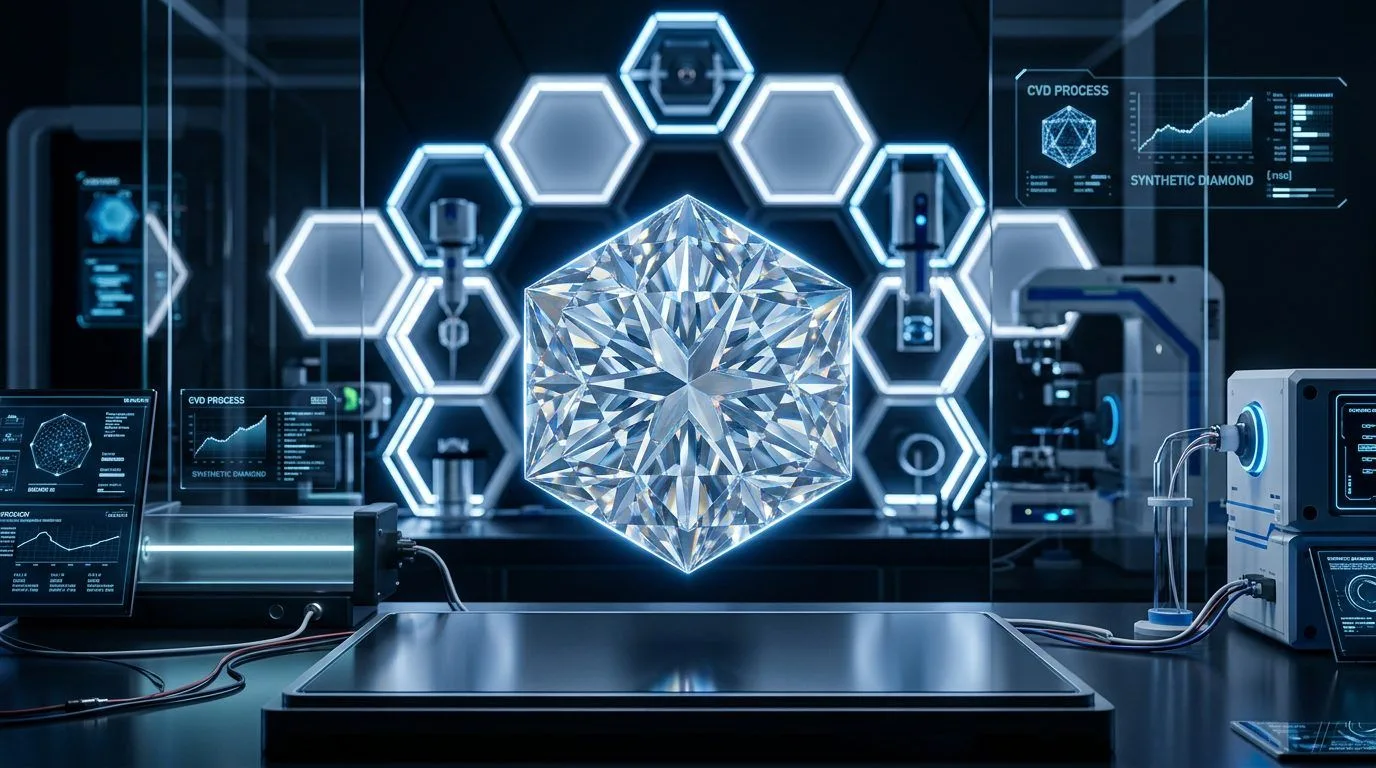
If you're looking to buy a lab-grown diamond in South Africa, one of the first questions you'll encounter is: which brands or sources are actually available here, and how do they differ? Unlike natural diamonds — graded and sold as individual certified stones with established provenance — the lab-grown market is more production-focused. Here's what South African buyers need to know in 2026.
How Lab-Grown Diamonds Reach the South African Market
South Africa doesn't manufacture lab-grown diamonds domestically. All lab-grown diamonds sold here are imported — primarily from India (which dominates global CVD production), China (a major HPHT producer), and the United States. The supplier landscape for South African jewellers is largely invisible to retail buyers: you're more likely to encounter certification bodies referenced than manufacturer names.
Most reputable South African diamond dealers — including Diagem Diamonds — source lab-grown stones through established trade networks that provide IGI-certified batches. The manufacturing facility name rarely appears on the certificate; what matters is the independent laboratory assessment, the quality grade, and the ethics of the sourcing chain.
What IGI Certification Means for Lab-Grown Diamonds
In the natural diamond world, GIA certification is the gold standard. For lab-grown diamonds, IGI (International Gemological Institute) has become the dominant certifying body globally — and that's the standard you'll encounter in South Africa. IGI operates 31 laboratories worldwide and issues millions of certificates annually.
An IGI lab-grown diamond certificate covers the same 4Cs as a natural diamond: cut, colour, clarity, and carat weight. Critically, it also states the growth method (HPHT or CVD) and confirms that the stone is laboratory-grown rather than natural. This disclosure is mandatory under South African consumer protection standards.
When you buy a certified diamond in South Africa, the certificate number can be verified directly on the IGI website. If a dealer cannot provide a verifiable certificate number, that's a red flag regardless of what claims they make about the stone's quality.
HPHT vs CVD: Which Is Better?
Both methods produce real diamonds — chemically and optically identical to natural diamonds. The difference is in the growth process:
HPHT (High Pressure, High Temperature) replicates the natural geological process: a diamond seed is subjected to extreme pressure and temperature until carbon crystallises around it. HPHT tends to produce diamonds with a distinctive growth pattern and can result in subtle metallic inclusions. Some HPHT stones show a faint blue or grey tint from trace boron. The method is also used commercially to convert natural brown diamonds to colourless or fancy yellow.
CVD (Chemical Vapour Deposition) grows diamond layer by layer from a carbon-rich gas in a plasma chamber. CVD is the dominant method for gem-quality lab-grown production because it allows more precise control over the final stone's characteristics. CVD stones can show distinctive strain patterns under polarised light, visible to trained gemologists, but invisible to everyday wear.
In practice, for a buyer: both produce beautiful diamonds and the difference is largely academic. The quality grade on the IGI certificate is what determines appearance and value. Do not allow a dealer to charge a meaningful premium for one method over the other without clear justification — the price difference in the market is minimal at equivalent quality grades.
How Diagem Sources Lab-Grown Diamonds
Diagem sources its lab-grown inventory through established trade networks that provide IGI-certified stones across a full range of shapes, sizes, and quality grades. As a 25-year direct diamond dealer operating within the trade, Diagem has access to a far wider selection than most retail jewellers — and at trade pricing, without the multiple-hands markup that retail routes add.
If you're looking for a specific quality grade, shape, or carat weight in a lab-grown diamond, Diagem can typically source it within a few days. The process: you describe what you want, Diagem locates matched stones, and you see options with full IGI certification before any commitment is required.
Lab-Grown vs Natural Pricing in SA: 2026 Reality
Prices are indicative and subject to exchange-rate changes. Confirm your final quote with David.
As of mid-2026, lab-grown diamond prices have stabilised after several years of rapid decline. A realistic picture for 1-carat round brilliants in G colour, VS2 clarity, Excellent cut:
- Natural diamond (GIA certified): approximately R63,920 for a 1.00ct G VS2 natural round guide example
- Lab-grown diamond (IGI certified): approximately R8,000–R15,000
That's roughly 80–85% less for lab-grown — a gap that has stabilised over the past 12 months. The implication: lab-grown makes compelling sense for buyers who prioritise size and quality over provenance, and for whom long-term resale value is not a primary consideration.
What to Look For When Buying Lab-Grown in SA
Three non-negotiables: an IGI certificate (not a dealer's appraisal document — an actual laboratory certificate with a verifiable number), a reputable dealer with transparent trade credentials, and clear disclosure of whether the stone is HPHT or CVD grown. Beyond that, the same rules apply as for natural diamonds: prioritise cut quality first, choose colour and clarity that represent genuine visible value (G-H colour and VS2-SI1 clarity is the sweet spot), and avoid paying meaningfully more for grade improvements that won't be visible without magnification.
For honest guidance and access to the full range of IGI-certified lab-grown options available in South Africa, contact the Diagem team directly. There's no commission pressure and no obligation to buy on the day.
Ready to find your perfect diamond?
Speak to David at Diagem — South Africa's trusted direct diamond dealer for over 25 years. Factory-direct pricing, GIA-certified natural diamonds and IGI-certified lab-grown diamond guidance with no obligation.
Have questions? Chat with David directly — he responds within minutes.
Chat with David on WhatsApp