Moissanite vs Diamond in South Africa: An Honest Comparison
Natural diamond guide-price note: These prices are examples for information only, not live offers or guarantees.
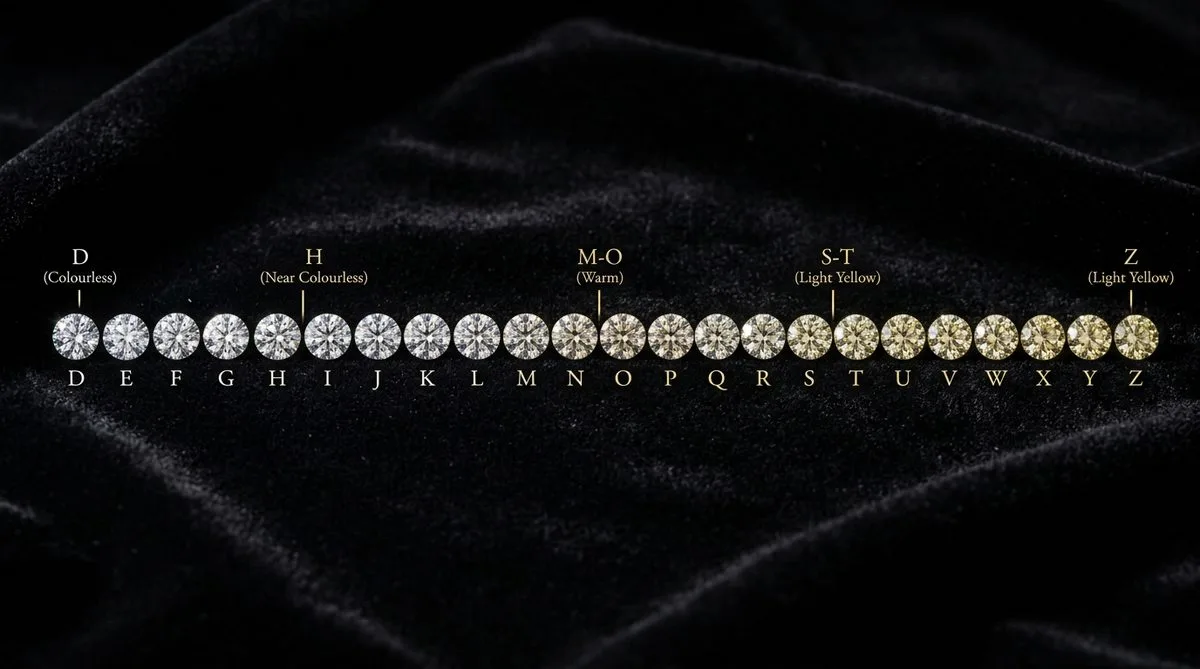
The moissanite vs diamond debate generates a lot of heat online, much of it from people with a commercial stake in one side or the other. This is an attempt at a genuinely honest comparison - what each stone is, how they actually differ, where moissanite makes sense, and why Diagem works with diamonds rather than moissanite (while being clear that it's not a moral position).
If you're a South African buyer weighing your options in 2026, here's what you need to know.
What Is Moissanite?
Moissanite is silicon carbide (SiC) - a mineral that occurs naturally in very small quantities (it was first discovered in a meteor crater in Arizona in 1893). Almost all moissanite sold commercially is lab-created. It has been marketed as a diamond alternative since the late 1990s, when Charles and Colvard commercialised it for the jewellery market. In South Africa, moissanite is increasingly available through online retailers and some independent jewellers.
Appearance: Fire, Brilliance, and the Rainbow Effect
This is the most practically important difference, and it's real.
Both stones are visually similar at a glance - they're both colourless (or near-colourless), both faceted, both sparkle. But the optical properties are measurably different:
- Brilliance (white light return) is slightly higher in moissanite than in diamond, but the difference is subtle to the naked eye.
- Fire (dispersion of coloured light) is significantly higher in moissanite - its dispersion index is 0.104 vs diamond's 0.044. In practice, this means moissanite throws more rainbow flashes, particularly in strong direct light.
Whether you find the moissanite fire beautiful or distracting depends on your taste. Many people love it. Others - and this is common feedback - feel the rainbow dispersion looks "fake" or "too sparkly" compared to the cleaner brilliance of a well-cut diamond. Under indirect or candlelight, the difference is much smaller. In bright sunlight or artificial spotlighting, it's noticeable.
An experienced jeweller can distinguish moissanite from diamond visually. A dedicated moissanite tester (which measures electrical conductivity differently from diamond testers) will identify it immediately.
Hardness and Durability
Diamond is the hardest naturally occurring material, scoring 10 on the Mohs hardness scale. Moissanite scores 9.25 - significantly harder than most materials, harder than sapphire, and more than hard enough for daily ring wear. In practical terms, both stones will resist scratching well for a lifetime of everyday use. The difference in hardness is real but unlikely to matter for most wearers.
Price Difference
Prices are indicative and subject to exchange-rate changes. Confirm your final quote with David.
This is where moissanite has its clearest advantage. In South Africa in 2026:
- A 1ct equivalent moissanite (moissanite is typically sold by diameter, not carat weight): R2,500 - R6,000
- A 1ct natural round diamond (GIA-certified, G VS2 Excellent guide example): R63,920
- A 1ct lab-grown diamond (IGI-certified, equivalent specs): R8,000 - R25,000
Lab-grown diamonds have significantly closed the price gap between moissanite and "real" diamond. Five years ago, lab-grown diamonds were 3 - 4x the price of moissanite. Today, for many specifications, the gap is much smaller - and lab-grown diamonds offer the same optical and chemical properties as natural diamonds, with full IGI certification.
The question of "is moissanite worth it vs lab-grown?" is a more interesting debate now than it was a decade ago.
Resale Value
Diamonds - natural and lab-grown - have an established secondary market. Natural diamonds retain meaningful resale value (typically 30 - 60% of purchase price, depending on grade and market conditions). Lab-grown diamond resale values have declined as prices have dropped. Moissanite has minimal resale value - it is not traded as a commodity and the secondary market is thin.
If resale value matters to you, choose a natural diamond. If you're buying a ring to wear and enjoy rather than as an investment, this consideration is less important.
Ethical Considerations
Moissanite is often marketed on ethical grounds - it's lab-created, so there's no mining impact. This is accurate as far as it goes. But the same argument applies equally to lab-grown diamonds, which are also produced without mining. The ethical distinction between moissanite and lab-grown diamond is negligible. The ethical argument for moissanite over natural diamonds is the same as the argument for lab-grown diamonds over natural diamonds.
At Diagem, our natural diamonds are sourced with conflict-free certification under the Kimberley Process. We're transparent about this, and David can discuss the sourcing chain for any specific stone if that's important to you.
Availability in South Africa
Moissanite availability in South Africa has improved over the last five years. Several online retailers now stock it, and a growing number of independent jewellers offer it as an alternative. However, it is not as widely available as diamonds in the higher-end Johannesburg market, and fewer bench jewellers have experience setting it (the stone behaves slightly differently from diamond under setting tools).
When Moissanite Makes Sense
Moissanite is a reasonable choice if:
- Budget is the primary constraint and even lab-grown diamonds are out of reach
- You love the high-fire, rainbow sparkle aesthetic and prefer it to diamond's optical character
- The wearer is aware it's moissanite and that's the deliberate choice (not a substitution)
- You're buying fashion jewellery rather than a commitment piece
It's a less obvious choice if you're buying an engagement ring and intend to represent it as a diamond - most experienced jewellers and many informed buyers will identify it, and this can create awkwardness later.
What Diagem Recommends
Diagem works with GIA-certified natural diamonds and IGI-certified lab-grown diamonds. We don't stock moissanite - not because we think it's a bad product, but because it isn't diamond, our clients generally want diamonds, and the lab-grown diamond option fills the price-sensitive segment well. We can help you find a well-specified lab-grown diamond that delivers genuine diamond quality at a price point that may be closer to moissanite than you'd expect.
Explore our GIA-certified natural diamond collection or our IGI-certified lab-grown diamond range to see what is available. If you have questions about what best suits your situation, David at Diagem is happy to give honest guidance without a sales agenda.
Ready to find your perfect diamond?
Speak to David at Diagem for an honest, no-pressure comparison of natural and lab-grown diamonds for your budget. Contact Diagem here.
Ready to find your perfect diamond? Speak to David at Diagem - he responds within minutes.
WhatsApp David