Engagement Ring Trends in South Africa 2026
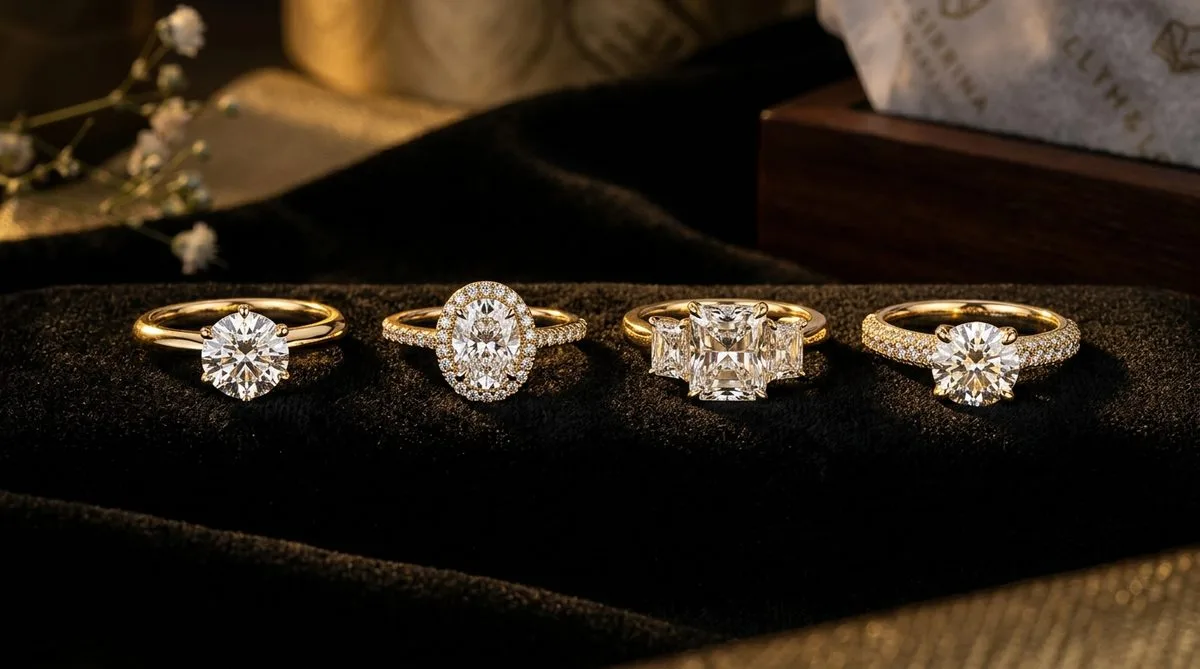
South Africa's engagement ring market has shifted noticeably over the past 18 months. The post-pandemic surge in traditional solitaires has given way to something more considered - buyers who've done their research, who know what they want, and who aren't simply chasing a trend they saw on social media. Here's what Diagem Diamonds is seeing from real buyers in 2026, and what it means for anyone choosing a ring right now.
Oval Cuts: The Shape of the Decade
If there's one trend that defines 2026 in South African engagement rings, it's the oval brilliant. Oval cuts have been growing steadily since around 2019, but they've now properly reached the mainstream. The appeal is practical as much as aesthetic: an oval diamond of the same carat weight as a round diamond will appear 10 - 15% larger due to its elongated face-up surface area. For South African buyers who are value-conscious, this is a meaningful difference. A 1.20ct oval can look like a 1.50ct round at a significantly lower price.
The elongated shape also flatters most hand shapes, making fingers appear longer and more slender. Diagem is seeing ovals as the first choice for a significant portion of its bespoke engagement ring clients - something that was not true even three years ago.
Lab-Grown Diamonds: Rewriting the Budget Conversation
Lab-grown diamonds have moved from niche to mainstream in South Africa. The percentage of Diagem clients choosing lab-grown for engagement rings has climbed sharply, and the reason is straightforward: a lab-grown diamond in the same quality grade as a natural costs 60 - 80% less. That means a buyer with a R40,000 budget who might have bought a 0.70ct natural diamond can now buy a 2ct lab-grown of excellent cut and colour.
The style implication is significant: lab-grown diamond buyers are choosing larger stones and more elaborate settings - more halos, more pave bands, more statement rings. Natural diamond buyers are often going the other direction: smaller, higher quality, cleaner designs. Both are valid, and the choice between them is increasingly one of philosophy rather than budget alone.
Coloured Stones: A Growing Niche
Coloured centre stones - sapphires, rubies, morganites - have been in play for several years, boosted by high-profile celebrity choices. In South Africa, coloured stone engagement rings remain a considered choice rather than a mainstream one. They appeal to buyers who specifically don't want what everyone else has.
The more interesting development in the SA market is the growing interest in coloured lab-grown diamonds, particularly fancy yellow. A 1ct fancy yellow lab-grown diamond in a white gold halo setting creates a striking visual for a fraction of the cost of a natural fancy yellow. For buyers who want something genuinely different without the premium of a natural coloured diamond, this is worth exploring through Diagem's bespoke jewellery service.
East-West Settings: Architecture Over Convention
East-West settings - where the stone is oriented horizontally across the finger rather than pointing toward the knuckle - have been a quiet trend for several years and are now appearing more frequently in bespoke commissions. They work particularly well with elongated shapes like ovals and emerald cuts, giving a ring a distinctive, modern architectural feel.
Paired with a clean band - often a simple flat or knife-edge profile - an East-West setting sits very close to the finger, snags less on clothing, and stands out from the ring next to it. For buyers who want something genuinely different without going into coloured stone territory, this is worth considering. It's also a style that tends to photograph beautifully on social media, which is not an irrelevant consideration for many buyers.
Minimalist Bands: The Timeless Counter-Trend
Not everyone wants a statement ring. There's a significant cohort of South African buyers in 2026 who are deliberately going minimalist: thin gold bands (1.5 - 2mm), single solitaire stones, no pave, no halo. The driving logic is longevity - these buyers aren't interested in what's fashionable in 2026; they're buying a ring they'll want to wear in 2046.
This is worth taking seriously. A thin band solitaire in 18ct white or rose gold with a well-cut round or oval stone is genuinely timeless. It's also practical: thin bands can be resized and repaired more easily than elaborate pave designs, and they work well alongside wedding bands of different widths and styles.
What Will Date vs What Will Last
The honest answer: most trends eventually date. Chunky signet-style engagement rings, asymmetric settings, and elaborate geometric designs tend to look very 2020s in a decade's time. Toi et moi rings (two-stone settings) are beautiful but very much a current moment. Highly architectural designs with unusual metal shapes can feel specific to an era.
What tends to last: classical solitaires, simple three-stone rings, well-proportioned halos in balanced designs, and East-West ovals in clean settings. The key is proportion - a ring that's harmoniously designed, not overcrowded with detail, will hold its appeal longer. When in doubt, simplicity ages better than complexity.
How to Choose Something Timeless
The practical advice: start with the stone, not the setting. A well-cut diamond in a solid quality grade will look good in almost any design. From there, choose a setting that suits the person who'll wear the ring - their lifestyle, their aesthetic, how they dress. Avoid being swayed solely by what's trending on social media; those images are styled and lit by professionals, and real diamonds on real hands look different.
Get advice from someone who sees thousands of diamonds a year - not someone who works on commission from a single retailer. For an honest, expert consultation with no pressure, contact the Diagem team directly. We'll help you find a ring that's right for right now and right for the long term.
Ready to find your perfect diamond?
Speak to David at Diagem — South Africa's trusted direct diamond dealer for over 25 years. Factory-direct pricing, GIA & IGI certified, personal guidance with no obligation.
Have questions? Chat with David directly — he responds within minutes.
WhatsApp David