Diamond Guide — The 4Cs Explained in Plain Language
Cut, colour, clarity, carat and certification — what each one means, and where it's worth spending your money.
How to Avoid Overpaying for a Diamond
Most buyers focus on carat weight and price. Here's what actually matters — the things the certificate doesn't always tell you:
Come to us with any quote and we'll tell you honestly if it's a fair deal — no obligation. David has over 25 years of experience and will give you a straight answer.
First-Time Diamond Buyer? Here's Exactly How It Works.
Send David an inquiry — he'll walk you through everything in plain language. No jargon, no pressure, no obligation.
Send Inquiry
Send David a WhatsApp inquiry. A real person answers. No robots, no call centres, no waiting on hold.
No-Obligation Chat
David explains everything in plain language. No pressure, no sales pitch — just honest advice from 25+ years in the diamond trade.
View the Diamonds
By appointment at our Johannesburg offices. We can also arrange to meet you in Cape Town.
Design & Approve
For bespoke jewellery, David consults with you at every stage. You receive photos throughout — nothing is a surprise.
Delivered to Your Door
Fully insured courier anywhere in South Africa. No need to travel — we bring the diamond to you.
"Anywhere in South Africa. Real diamonds. Real people. Real simple."
Home / Diamond Guide
Everything turns on five things.
Buying a diamond feels complicated until you realise the price comes down to five factors: the four Cs — cut, colour, clarity and carat — plus the certificate that proves them. Understand these and you can buy with confidence anywhere.
What each one actually means.
Cut
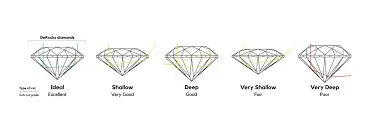
How precisely the diamond is faceted. Cut, not carat, is what makes a diamond sparkle. Spend here first.
Colour
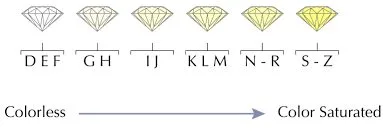
Graded D (colourless) down through the alphabet. Near the top of the scale, differences are invisible to the eye but not to the price.
Clarity
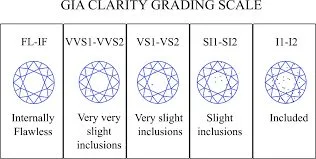
How free the stone is of natural inclusions. Many stones are 'eye-clean' well below flawless — a smart place to save.
Carat
The diamond's weight. Buying just under a round weight, or a fancy shape, can give you visible size for less.
Certification
An independent IGI report proves the four Cs. Never buy an uncertified diamond of any real value.
Shape
Round brilliant is the most sparkling and sought-after; ovals, cushions and emeralds offer character and often more size per rand.
Where to go next.
Ready to look at stones? Compare certified natural diamonds and lab-grown diamonds, see how they come together in a bespoke engagement ring, or learn what makes a stone investment grade. Prefer to just ask? Message us on WhatsApp and we'll point you the right way.
The Price Trap: Why Cheap Diamonds Cost You More
The most common mistake first-time diamond buyers make isn't overpaying — it's buying the wrong diamond at any price. Here's the truth that no online price comparison will tell you:
The safest thing you can do before buying from anyone — online, in a mall, or elsewhere — is get an expert second opinion.
Send David an inquiry — even if you don't buy from us.
Send David any certificate. He will tell you honestly whether it's a well-made diamond or a cleverly priced one. No sales pitch. No obligation. Just 25+ years of experience working for you.
With over 25 years in the South African diamond trade, we leave no stone unturned to find exactly what you're looking for. Every enquiry is handled personally by David — no chatbots, no automated responses. Real expertise. Real service.
💬 Send InquiryLet's talk →
Frequently asked questions
What are the 4Cs of a diamond?
Which of the 4Cs matters most?
What is a diamond certificate?
What's the difference between natural and lab-grown diamonds?
How to Buy a Diamond in South Africa — A Step-by-Step Guide
Buying a diamond is one of the most significant purchases you'll make. These steps will help you navigate the process confidently, whether you're buying a loose diamond, an engagement ring, or made-to-order diamond jewellery.
Step 1: Set Your Budget
Before looking at any diamonds, establish a clear budget. There are no rules about what you "must" spend — the right budget is whatever suits your financial situation. At Diagem, we regularly help clients find stunning certified diamonds across a wide price range. A well-cut 0.7ct diamond in E colour and VS2 clarity can be more beautiful than a poorly cut 1.2ct stone at the same price.
Step 2: Choose Natural or Lab-Grown
Natural diamonds are mined from the earth, carry rarity and heritage, and maintain stronger resale value over time. Lab-grown diamonds are chemically and visually identical, cost 50–70% less, and allow you to buy a significantly larger stone on the same budget. Both are certified by the same laboratories (IGI) and both are real diamonds. Neither choice is objectively better — it depends on what matters most to you.
Step 3: Prioritise Cut Quality
Of the 4Cs, cut quality has the greatest impact on how beautiful a diamond looks in person. An Excellent or Ideal cut grade (on GIA certificates) means the diamond's facets are precisely angled to maximise light return, producing maximum fire and brilliance. A diamond with top cut quality in E colour and VS2 clarity will outperform a larger stone with a poorer cut. Never compromise on cut.
Step 4: Understand the 1 Carat Price Point in South Africa
A 1 carat natural round diamond in D–F colour and VS clarity with an Excellent cut has Diagem guide examples from about R70,720 to R103,360, depending on the exact colour, clarity, certificate and stone. The equivalent lab-grown diamond costs R15,000–R35,000. These are guide examples only.
Pricing note: Diamond prices fluctuate with certificate, carat, cut, colour, clarity, exchange rates and availability. WhatsApp David for the latest price on the exact stone or jewellery piece you are considering.
Natural diamond guide-price note: These prices are examples for information only, not live offers or guarantees.
Below 1 carat, price increases are more gradual. Above 1 carat, prices increase sharply — each 0.1ct increment at the top end represents significant additional cost because large, high-quality diamonds are increasingly rare.
Step 5: Verify Certification
Natural diamonds supplied by Diagem use GIA certification. Lab-grown diamonds supplied by Diagem use IGI certification. The certificate independently verifies every quality characteristic of the diamond and is essential for insurance.
Step 6: Compare Price-Per-Carat
Prices are indicative and subject to exchange-rate changes. Confirm your final quote with David.
When comparing diamonds, calculate the price per carat (total price ÷ carat weight). A 1.00ct H VS2 guide example at R57,120 is R57,120/ct. A 0.90ct H VS2 guide example at R37,944 is R42,160/ct. Comparing price-per-carat across similar quality grades helps reveal true value and identify where a particular stone is priced competitively. David at Diagem can walk you through this comparison for any stones you're considering.
What Makes Diagem Different — Buying Direct from the Diamond Dealer
Traditional jewellery retail involves multiple layers: manufacturer → wholesaler → retailer → you. Each layer adds margin. When you buy from Diagem, you're buying directly from a diamond dealer with 25+ years in the trade and membership of the Diamond Dealers Club of South Africa and the World Federation of Diamond Bourses. This eliminates the retail markup, which is why our clients regularly receive certified diamonds that would cost 30–60% more at a high street jeweller.
Our process: you describe what you're looking for (shape, carat, quality, budget), David sources certified options from his network, presents them with full certification and pricing, and you make a decision with full information. No sales pressure, no showroom overhead, no retail markup. Contact us on WhatsApp to begin.
Ask a dealer directly.
Send your question along with your budget and what you're shopping for. We'll give you straight answers — no jargon, no pressure.
See our full list of frequently asked questions about buying diamonds →
Let's find your diamond.
Speak to a dealer, not a salesperson. Get an honest quote with no obligation.